
Architecture Collaborators: Leo A. Daly and Tyler/Gonzalez
When Burbank Water and Power (BWP) built a supremely efficient and award-winning electric power plant in 2005, it also replaced several of the existing substations located on the campus. In restoring the old substation sites, BWP saw an opportunity to achieve something greater. Los Angeles-based landscape architecture firm AHBE Landscape Architects was commissioned to create an ambitious plan for this campus that focused on transforming the grounds from an aging industrial site into a regenerative green space.
With the first phase completed, BWP and AHBE have successfully demonstrated that industry and environment can not only just co-exist, but also thrive together. Architecture firms Leo A. Daly and Tyler/Gonzalez played a key role in making this significant achievement possible.
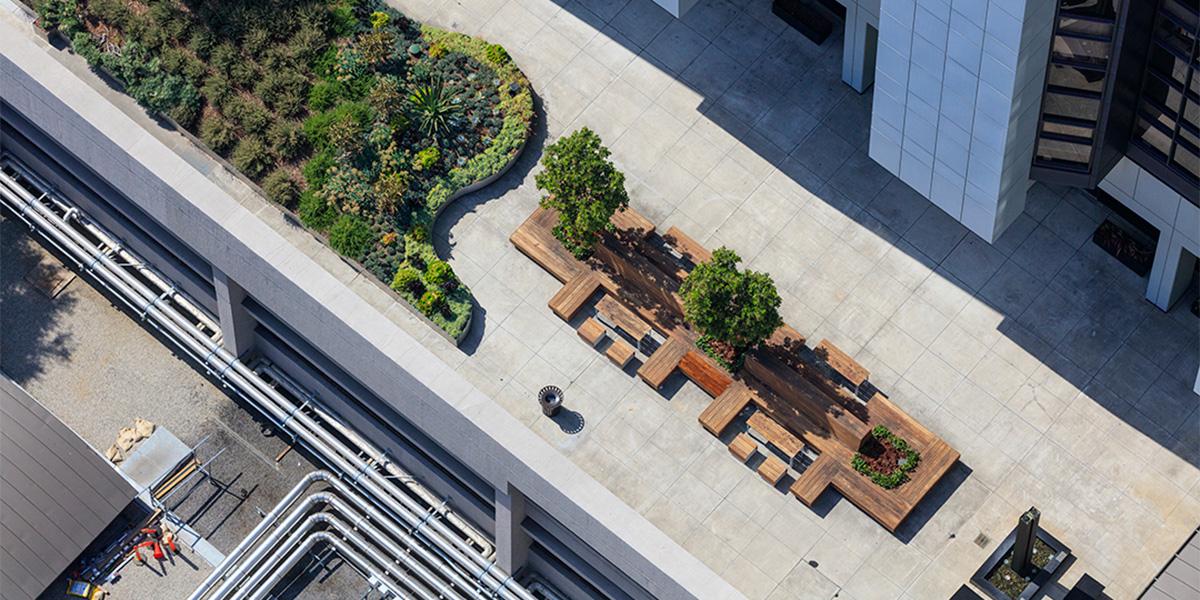
Rooftop Gardens – The Administration Building boasts three rooftop gardens that serve to reduce the heat island effect, help channel and filter storm water, and reduce the building’s air conditioning requirements. The roof gardens are covered with recycled glass pavers that depict a meandering stream and native plants.
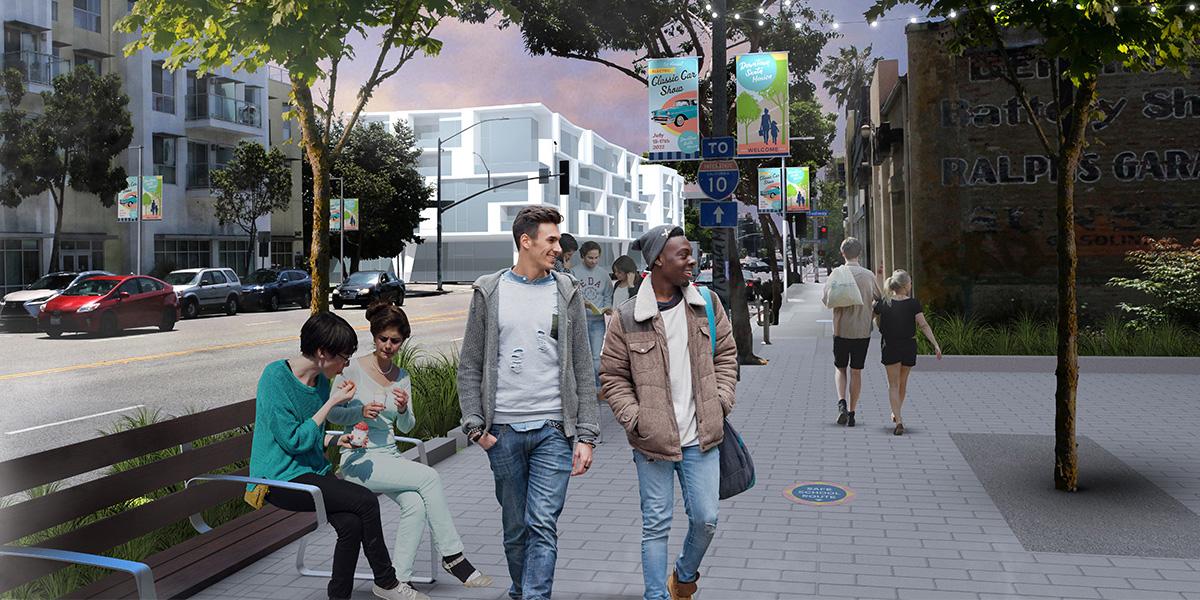
Water Reclamation + Filtration – The entire campus stands as an illustration of how and why water reclamation and filtration is so important and how it can be achieved. The campus features five different types of water filtration technologies including infiltration, flow-through, detention, tree root cells, and rainwater capture. The project also features one of the longer Green Streets in Southern California; the landscape running across three contiguous City streets acts as a filter before runoff enters the storm water system. By California law, all projects are required to mitigate at least the first ¾ inches of rainfall, the water that collects all the dust, pollution and other toxins that accumulate on non-permeable urban surfaces such as streets and roofs. Thanks to the combination of innovative technologies that AHBE has integrated into the design, the BWP campus is already mitigating the first full inch. In the future, the master plan would see the campus become a zero runoff site, far exceeding what state law requires.
Solar Power – The architectural solar array emulates design elements of the BWP Administrative Building, paying homage to both the Art Deco heritage of the building and the City’s historical ties to aviation. The solar system will also almost completely power the new LEED building that is currently under construction.
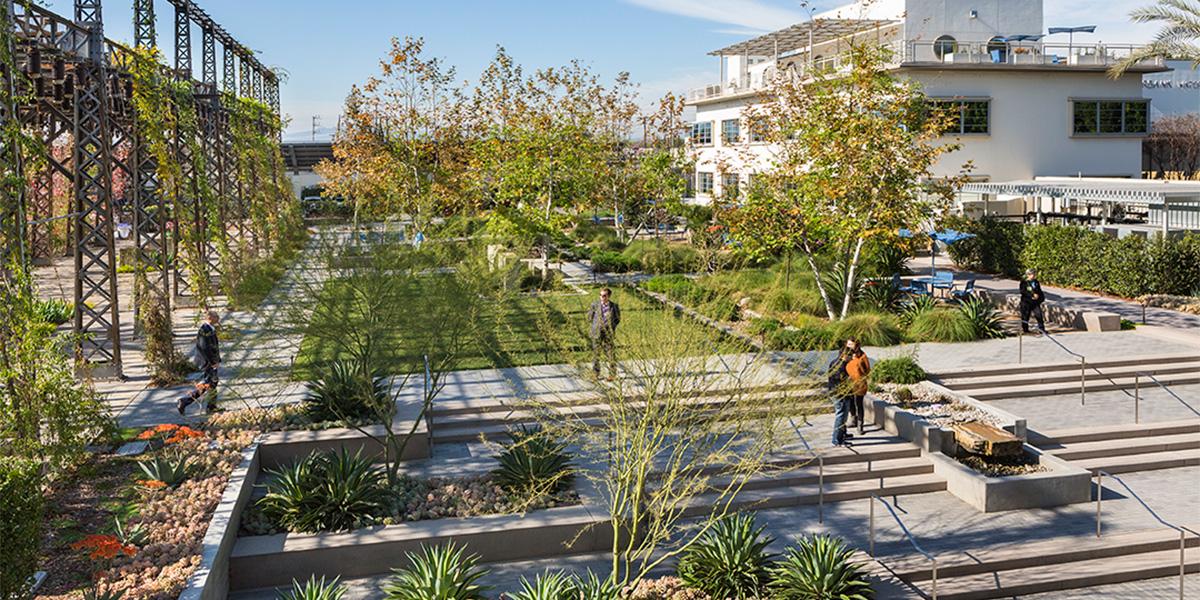
Reclaimed Substation – The most striking feature of the new campus is at the heart of the Centennial Park. The structure of an old electric substation was purposely left intact and integrated into AHBE’s design. Repurposed as an outdoor meeting room or super trellis, the skeletal remains of the substation will soon be covered in living vines, creating a poignant juxtaposition of industry and environment.
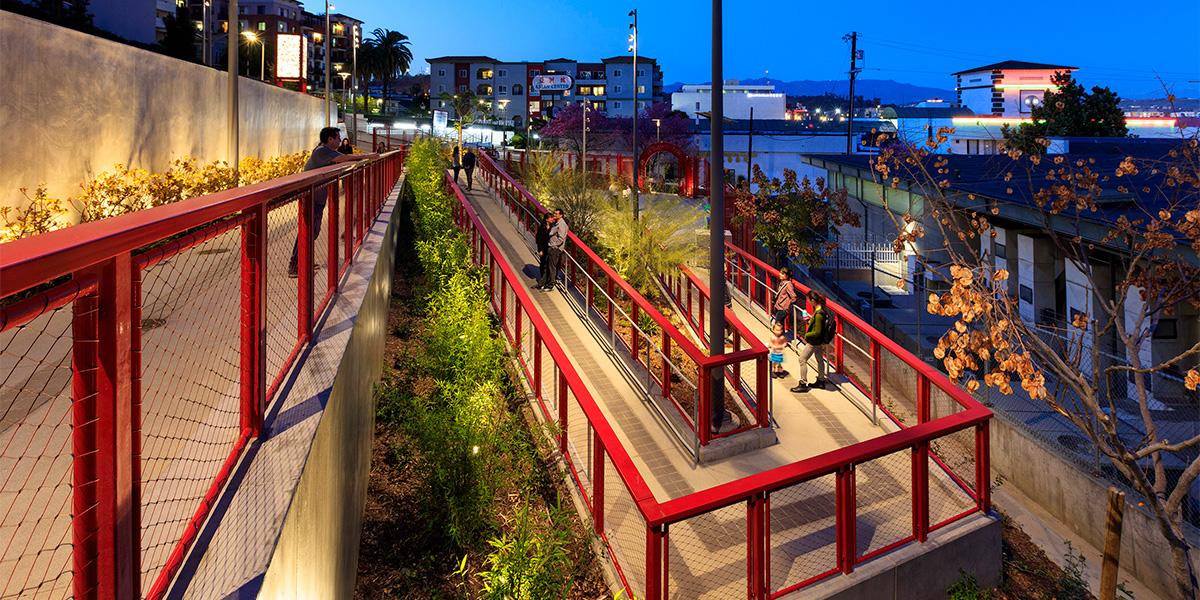
Green Space - An employee park will now reside where an old substation used to be, but concrete block remnants of the industrial structure have purposely been retained, now serving as sculptural elements in a flourishing riparian environment. Beyond the campus walls on Lake Street is a pocket park that is open to the public. All of the landscape – whether in the parks, along the streets, or on the roof – serves a dual purpose. Aesthetically, they provide green space for employees and the public. Functionally, there are water filtration systems hidden below ground, allowing the entire campus to serve as a water filtration system, cleaning water and removing toxins before letting water return to the watershed.


